


The way people plan trips has changed more in the last two years than in the previous decade. Smart travelers in 2026 don’t spend weekends lost in browser tabs, spreadsheets, and conflicting blog posts. They plan faster, spend less, and arrive more prepared. Here is exactly what separates efficient trip planning from the chaos most people still default to.
The Old Way Is Costing You Time and Money
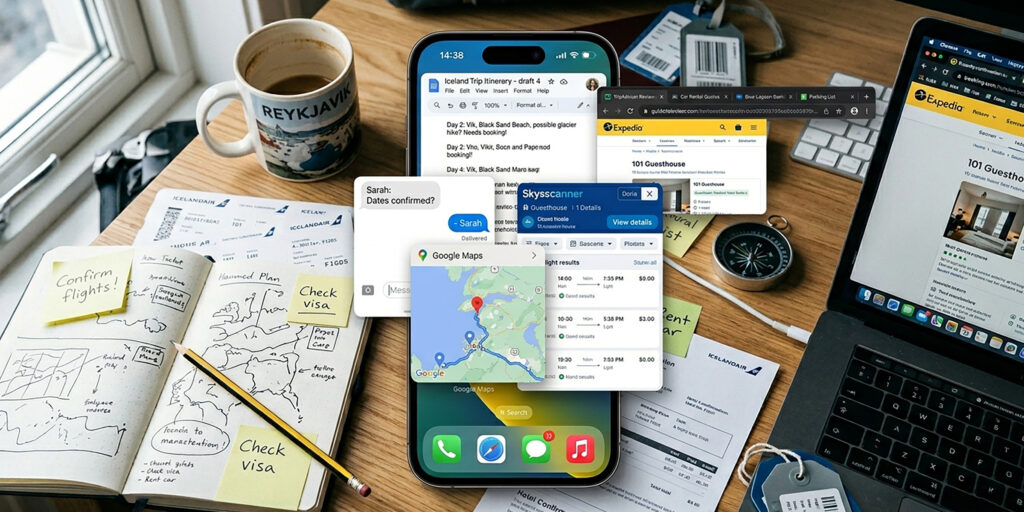
Picture this: you land at midnight in a city you’ve never been to. Your phone is at 8%. You open WhatsApp to find the hotel address, but it’s buried somewhere between the group chat where someone shared a restaurant recommendation three weeks ago and the forwarded booking email you never saved properly. The taxi driver is waiting. Your travel partner is asking where you’re going. You have no idea.
That is not bad luck. That is what unstructured trip planning looks like at arrival.
The average traveler spends 10 to 14 hours planning a single trip. That time goes into comparing flights across four sites, building itineraries in Google Docs, cross-referencing hotel reviews, and still ending up at the airport unsure about the first day’s plan.
This is not a research problem. It is a systems problem.
Smart travelers treat trip planning as a structured workflow, not a browsing session. They define the destination, budget, and duration first. Then they build the itinerary around real constraints, not wishlist thinking.
How Smart Travelers Actually Plan in 2026
They Start With Constraints, Not Inspiration
Most people start planning with “where should I go?” That is the wrong first question.
Think about the last time a group trip fell apart before it started. Someone wanted beach. Someone wanted culture. Nobody agreed on budget. Three weeks of indecision, then a rushed booking that nobody loved.
Smart travelers short-circuit that loop by locking in constraints before the destination conversation even starts:
- How many days do I actually have, including travel days?
- What is the real budget, including transfers, food, and activities?
- What is the physical and logistical pace I can maintain?
Constraints are not limitations. They are the frame that makes decisions fast. Once you know you have six days and a mid-range budget, half the destinations eliminate themselves without debate.
Locking in these parameters before researching destinations eliminates 60% of decision fatigue upfront []. These group travel planning tips apply whether you’re coordinating two people or ten. If you’re planning with others, check out how to plan a group trip without the chaos for a framework that handles shared decision-making specifically.
They Use a Dedicated Trip Planning App Instead of Generic Tools
Google Docs and spreadsheets are not trip planning tools. They are blank canvases that require you to build the structure yourself every time.
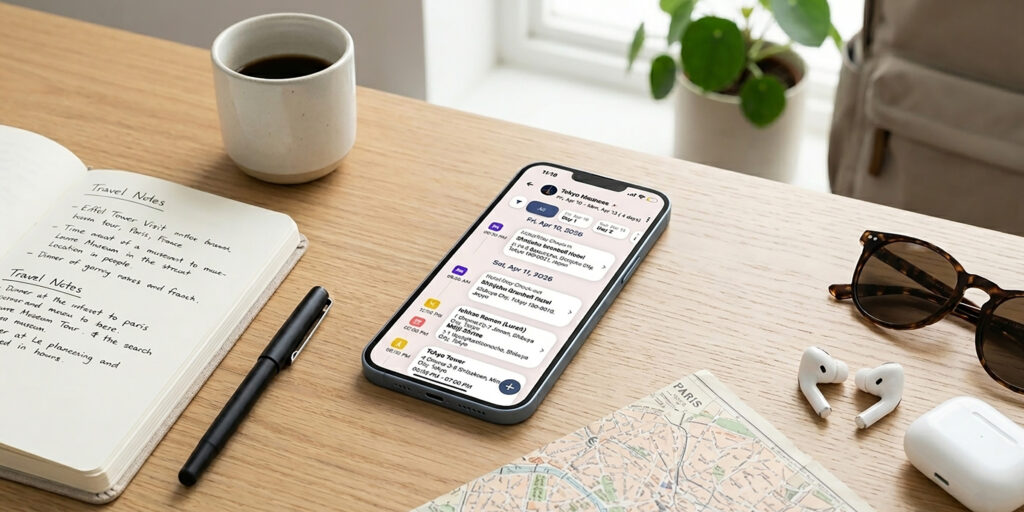
A purpose-built trip planning app like Tripsil handles the structure for you. Tripsil lets travelers build day-by-day itineraries, organize bookings, and keep everything in one place without manually formatting a single cell.
The difference is not cosmetic. When your itinerary structure already exists, you make decisions instead of building scaffolding.
They Build the Itinerary Before Booking Anything
This sounds counterintuitive. Most people book flights first and figure out the rest later.
That approach produces moments like this: you’ve booked four nights in Lisbon because the flight was cheap. Then you realize the region you actually wanted to explore, the Douro Valley wine country, requires a two-hour drive from the city each way. You’ve now spent four nights in the wrong base, or you’re burning half each day on transfers you didn’t plan for.
Smart travelers do the opposite. They sketch the itinerary first to understand:
- Which cities or regions they actually need to visit and in what order
- How many nights each location genuinely requires
- Whether their routing makes geographical sense
Only after the itinerary is drafted do they open booking platforms. Use a ready-made itinerary template to start this process faster instead of building from a blank document every time.
They Cluster Activities by Location, Not by Category
Amateur itineraries group activities by type: “day one: museums, day two: beaches.” Smart itineraries group activities by geographic proximity.
Clustering by location means less transit time, lower daily transportation costs, and more time actually experiencing the destination. A well-clustered day in Rome does not move you from the Colosseum to Trastevere to the Vatican and back. It keeps you in one quadrant and works through it.
A good travel itinerary builder surfaces this geographic logic automatically. Tripsil’s day-by-day builder, for example, lets you organize stops spatially so you can see the routing before you commit to it.
AI Travel Planning in 2026: What It Does Well and What It Does Not
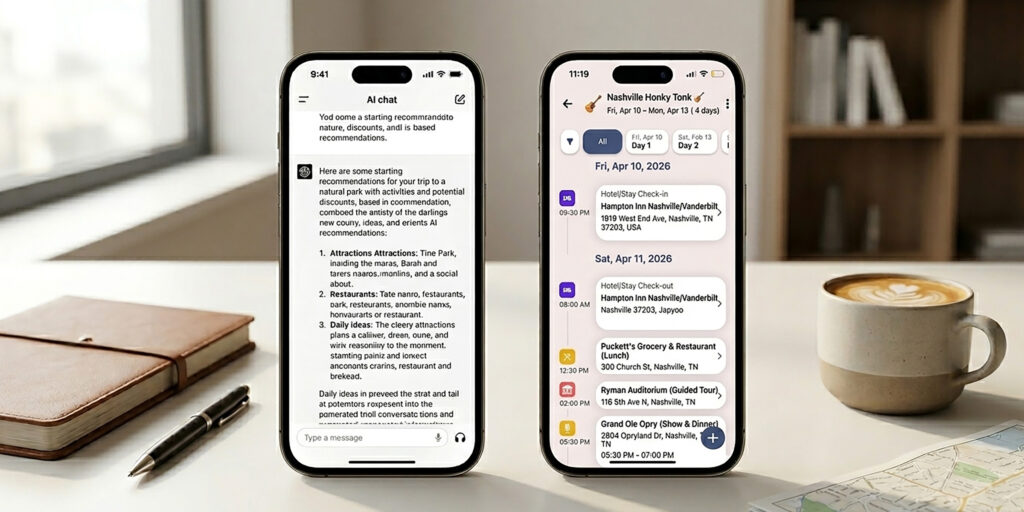
AI trip planning tools have matured significantly since 2023. AI travel tools like ChatGPT, Gemini, Perplexity, and dedicated AI travel assistants can now generate surprisingly coherent itineraries for popular destinations.
But smart travelers understand the specific limits of AI in trip planning:
What AI does well:
- Generating a rough itinerary skeleton for a destination you know little about
- Surfacing activity categories you had not considered
- Answering specific factual questions about visa requirements, entry rules, and transit options
What AI does not do well:
- Real-time pricing and availability
- Personalized routing based on your actual travel pace
- Tracking your bookings, confirmation numbers, and accommodation details
This is why travelers who rely entirely on AI-generated itineraries often arrive with a plausible plan that falls apart on day one. The restaurant it confidently recommended closed eight months ago. The transit option it described was discontinued. The “hidden gem” neighborhood it suggested is now a construction zone.
One traveler described spending her first morning in Bangkok working backwards from a broken AI itinerary, rebooking a tuk-tuk, finding a replacement breakfast spot, and losing two hours she had mentally allocated to the Grand Palace. The itinerary looked perfect on the screen. It just did not reflect the ground.
The smart approach in 2026 is to use AI for inspiration and initial research, then move that structure into a dedicated trip planning app where the real coordination happens.
Trip Planning Tips for 2026: The Five Habits of Efficient Travelers
1. They Set a Single Source of Truth
Every booking, confirmation, and note lives in one place. Not across email, WhatsApp, a notes app, and a browser folder of saved tabs. One place.
Consider what happens when this breaks down: one person in the group has the hotel address saved in their phone. That person’s phone dies on the connecting flight. Now four people are standing in an airport at 11pm, and nobody has the address. This is not a hypothetical. It happens constantly on group trips.
This matters most when something goes wrong, which it does. If your flight changes, you need to find your hotel confirmation in under 30 seconds, not dig through 200 emails.
For group travel specifically, travel collaboration tools let multiple people access the same itinerary in real time, so no single person becomes the accidental keeper of all critical information.
2. They Build in Buffer Time Deliberately
Smart travelers add buffer time as a first-class element of the itinerary, not as an afterthought. Every third day, or on transition days between cities, they schedule nothing. This time absorbs delays, accommodates the unexpected discovery worth pursuing, and prevents the exhaustion that turns good trips into endurance tests.
3. They Separate Research From Planning
Research is collecting options. Planning is making decisions. These are different cognitive tasks and should not happen simultaneously.
Smart travelers do their destination research in one session, then close the browser and build the itinerary from what they have gathered. Mixing both creates infinite loops where you keep discovering new options and never finalize anything.
4. They Validate the Itinerary Logistically Before Booking
Before any money changes hands, they check:
- Are the opening hours of key attractions accurate for their travel dates?
- Does the geographic clustering hold up when you look at an actual map?
- Are the transit connections they planned actually available at the times they need?
Ten minutes of validation prevents the kind of mistakes that cost real money to fix.
5. They Share the Itinerary With Travel Companions Early
Late-stage itinerary disagreements are one of the leading causes of travel friction. The scenario plays out the same way every time: you’ve spent two weeks building a detailed itinerary, you share it the night before departure, and someone says they assumed you were going to the coast on day three, not the mountains. The trip hasn’t started and there’s already tension.
Smart travelers share a draft itinerary with everyone traveling at least two weeks out. This surfaces conflicts early, when they are easy to adjust, instead of at the destination when adjustments cost real money. Aligning on how to split travel expenses at this stage, before the trip, prevents the other major source of group trip friction: the bill.
Trip Planning Apps in 2026: What to Actually Look For
The market for travel planning apps has consolidated significantly. The apps that have survived do so because they solve a real workflow problem, not because they have the most features. For travelers looking for the best trip planning app in 2026, the criteria below narrow the field significantly.
The broader travel app market is saturated, but most apps solve the wrong problem. They focus on discovery and inspiration when what travelers actually need after the inspiration phase is organization and structure. When evaluating a trip planning app, these are the criteria that matter:
Itinerary structure: Can you build a day-by-day plan without fighting the interface?
Cross-device access: Can you pull up your plan from any device, without a desktop-only workflow?
Booking organization: Does it store confirmations and details without requiring manual data entry?
Collaboration: If you’re traveling with others, can they access and contribute to the shared plan?
Offline access: Can you access your itinerary without a data connection at the destination?
Tripsil addresses each of these directly. It is built as a travel itinerary builder for real trip planning workflows, not as a social travel platform that also has an itinerary feature buried in the settings.
The Role of Over-Tourism Awareness in 2026 Trip Planning
Smart travelers in 2026 are building destination timing into their planning process in ways that were not common three years ago.
Over-tourism at major European, Southeast Asian, and Latin American destinations has produced real planning consequences:
- Timed entry requirements at heritage sites that sell out weeks in advance
- Dynamic pricing at popular attractions that spikes by 40 to 200% during peak windows []
- Accommodation shortages in popular zones during major local events
Smart trip planning now includes checking seasonal visitor density before finalizing dates, not after. A shift of seven to ten days can mean the difference between manageable crowds and queues that consume hours of a travel day.
How to Plan a Trip Efficiently: A Practical Framework
Here is how to make a travel itinerary that actually holds up from planning to landing. Think of this as your travel planning checklist, in the order it should actually be executed:
- Define constraints: Days, budget, physical pace, travel companions
- Choose destination category: Urban, nature, cultural, relaxation, or mixed
- Research the destination broadly: Spend no more than two to three hours on this
- Build a day-by-day skeleton: Anchor each day to one primary activity or location
- Cluster secondary activities geographically: Fill each day around its anchor
- Validate logistics: Hours, transit, routing
- Book in sequence: Flights, then accommodation, then activities
- Move everything into your trip planning app: Confirmations, notes, logistics
- Share with travel companions: Get alignment early
- Add deliberate buffer days: Non-negotiable
This is not complicated. But most travelers skip steps three, four, six, and nine. Itinerary planning is the step most travelers rush or skip entirely, and it is the one that causes the most expensive mistakes.
Stop Managing Your Trip Across 12 Different Apps
You shouldn’t need WhatsApp for the hotel address, Gmail for the booking confirmations, Google Docs for the itinerary, Notes for the restaurant list, and a separate folder of screenshots for everything that didn’t fit anywhere else.
That is not a travel workflow. That is a scavenger hunt that starts the moment something goes wrong.
Tripsil is a trip planning app built to eliminate that chaos. Plan your full itinerary in hours instead of weekends. Keep every booking detail in one place. Never lose a confirmation number at midnight in a foreign airport again.
Download Tripsil . Your next trip should not be this hard to manage.
Download Tripsil Free on Google Play
Download Tripsil Free on App Store
The Bottom Line
Smart travelers in 2026 are not smarter about destinations. They are smarter about process. They define constraints before browsing, build itineraries before booking, and keep everything organized in a single tool.
The travelers who still plan the old way, across twenty browser tabs and a shared Google Doc, are not having more authentic experiences. They are just spending more time stressed and less time prepared.
Your next trip will happen whether you plan it well or not. The only variable is how much of it you spend reacting to avoidable problems versus actually being there.
Frequently Asked Questions
What is the best way to plan a trip in 2026?
Start by defining your real constraints: available days, budget, travel pace, and companions. Then build a day-by-day itinerary before booking anything. Use a dedicated trip planning app to keep bookings and details organized in one place.
How long does it take to plan a trip efficiently?
A well-structured trip can be fully planned in three to five hours using the right tools. Most travelers spend far longer because they mix research with decision-making and lack a centralized system for organizing their plans.
Are AI tools reliable for trip planning?
AI tools are useful for generating initial itineraries and answering factual questions about destinations. They are not reliable for real-time pricing, availability, or personalized routing. Use AI for research, then transfer your plan to a dedicated itinerary builder.
What should a travel itinerary include?
A complete travel itinerary includes day-by-day activities clustered by location, accommodation details, transportation between destinations, booking confirmation numbers, operating hours of key attractions, and at least one buffer day per four to five travel days.
What is the best trip planning app in 2026?
The best trip planning app is one that lets you build a structured day-by-day itinerary, store all booking details in one place, and access your plan offline. Tripsil is designed specifically for this workflow and is available on Google Play.