

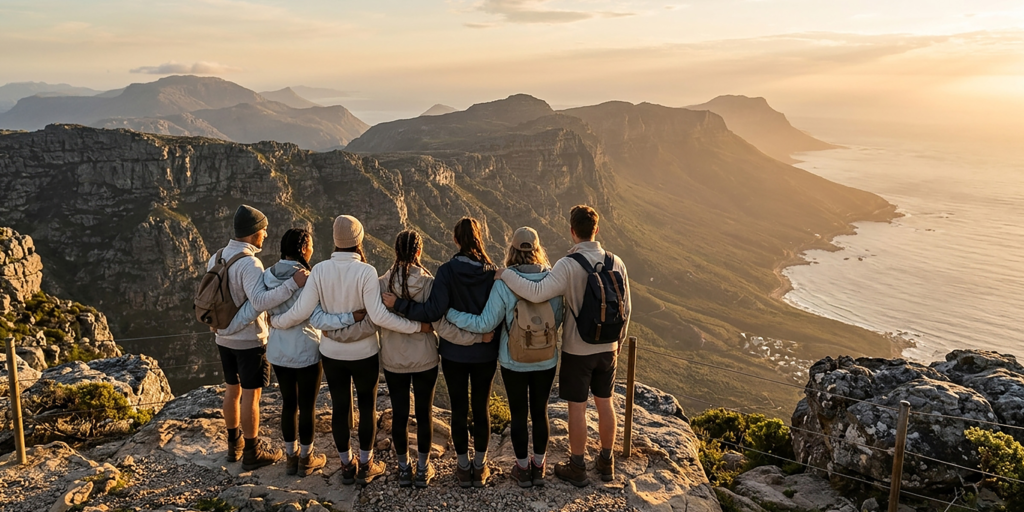
There’s a particular kind of happiness that only happens on a group trip. Somewhere between the chaotic car playlist arguments and the 2 AM rooftop conversations, you stop being just friends or colleagues and become people who shared something. India in 2026 has every version of that trip on offer.
We’ve pulled together nine destinations that are genuinely great for groups, not just pretty to look at, but actually built for the kind of travel that’s better with more people. For each one, we’ve broken down where to go, what to do, when to visit, and the little things most travel blogs skip entirely.
1. Spiti Valley, Himachal Pradesh
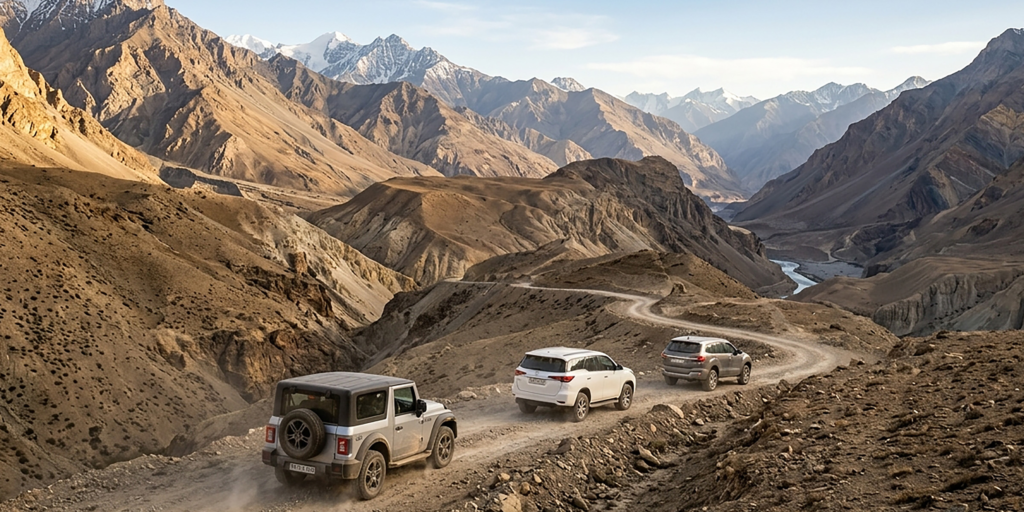
Nothing quite prepares you for Spiti. You’ve seen the photos, sure. But when you’re actually standing on those roads with the whole group, nothing around you for miles except brown mountains and a blue sky that feels too close, it hits differently. Spiti is one of those places where the journey is as much the point as the destination.
When to Visit in 2026
June to September is the window. The Manali-Kaza highway typically opens by late May. If you want more flexibility, the Shimla route via Reckong Peo stays accessible longer into the year. Winters are brutal and most roads close entirely, so don’t push it.
What to Do There
- Key Monastery (Ki Gompa) is the visual centrepiece of the valley. Over 1,000 years old, sitting at 4,166 metres, and surrounded by nothing but mountains. Go in the morning when the monks are around.
- Chandratal Lake is the trip highlight for most groups. A glacial lake at 4,300 metres that shifts colour through the day from blue to green to silver. The drive up is an adventure in itself.
- Hikkim has the world’s highest post office. Yes, you can send postcards from there. Yes, your group will spend way longer there than expected.
- Tabo Monastery has 1,000-year-old murals that have somehow survived in near-perfect condition. It’s UNESCO tentative listed and genuinely one of the most peaceful places in India.
- Dhankar is a crumbling monastery on a cliff that looks like it could slide off at any moment. That’s not an exaggeration. It’s simultaneously terrifying and beautiful.
Best group size: 6 to 12 Why groups love it: The long drives between villages do something to a group. By day three, everyone’s talking more openly, laughing harder, and the people who barely knew each other at the start are finishing each other’s sentences. Spiti has a way of stripping everything back.
Insider tip: Most groups do Manali to Kaza. Flip it. Start from Shimla, go through Narkanda and Reckong Peo, and hit Tabo and Dhankar before Kaza. You’re better acclimatised, the road is less trafficked, and you experience the valley’s best monasteries when you still have energy for them.
Planning a Spiti trip with 8 people across different schedules? Tripsil’s shared itinerary feature lets the whole group build the day-by-day plan together in real time, so no one person is stuck doing all the organizing.
2. Coorg, Karnataka
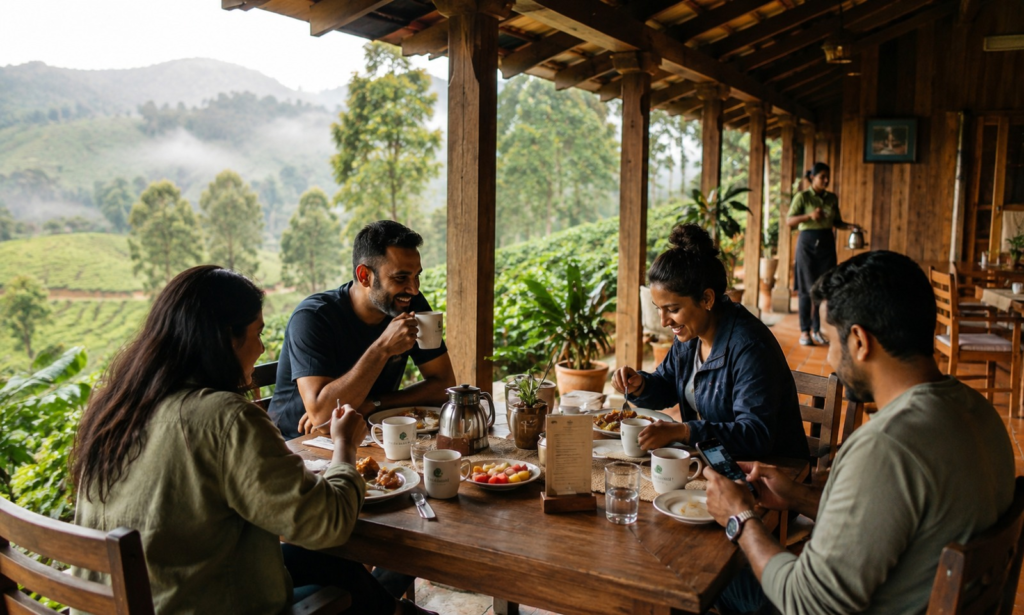
Coorg smells like coffee and rain. Even if you visit in October when the skies are clear, there’s always this faint woody, earthy scent hanging in the cool air that makes you want to slow down immediately. It’s the kind of destination where you arrive with a packed itinerary and end up spending two extra hours over breakfast because nobody wants to leave the view.
When to Visit in 2026
October to March is the sweet spot. October and November are especially good, post-monsoon green everywhere and just cold enough in the evenings to want a blanket. July to September is technically beautiful but the rain is relentless, which can throw plans off for larger groups.
What to Do There
- Abbey Falls is a 70-foot waterfall tucked inside coffee plantation country. The walk through the estate to get there is half the experience. Go early, before the day-trippers from Madikeri show up.
- Dubare Elephant Camp is one of those rare places where the wildlife interaction is handled properly. You can watch elephants being bathed and fed under trained mahout supervision. Works beautifully for mixed-age groups.
- Namdroling Monastery in Bylakuppe is a short drive from Coorg and completely worth it. The main temple is covered in gold and the whole complex has this unexpected serenity. Most groups don’t know it exists until someone in the car spots it on Maps.
- Raja’s Seat is a simple viewpoint garden in Madikeri town, and the sunset there with the whole group watching the Western Ghats light up is genuinely one of those moments.
- Coffee estate walks through the plantations around Siddapur or Somwarpet are far better than the packaged resort versions. The estate owners will walk you through themselves and usually feed you well afterward.
Best group size: 8 to 20 Why groups love it: Coorg has proper estate homestays and bungalows that fit large groups under one roof. No splitting across multiple hotels. Everyone wakes up to the same view, eats at the same long table, and ends the evening together on the same veranda.
Insider tip: Book directly with an estate in Siddapur or Somwarpet rather than a resort near Madikeri. Better food, quieter setting, and the hosts will often cook a full Coorgi dinner for the group. It’s the kind of evening nobody forgets.
With a large family or friends group, Coorg also involves a fair amount of shared spending: estate stays, activities, the drive. Tripsil’s expense splitting handles all of that automatically so the trip treasurer isn’t stuck with a spreadsheet at the end.
3. Rann of Kutch, Gujarat
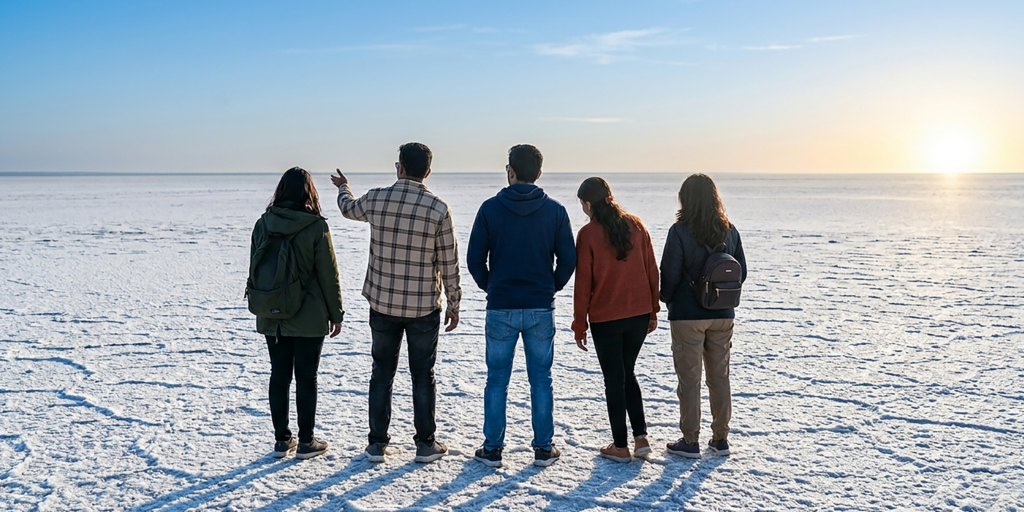
You don’t fully understand the Rann until you’re standing on it at 10 PM, white salt desert stretching into the darkness in every direction, not a sound except your group talking in lowered voices because the silence demands it. It’s one of those rare Indian destinations that feels completely alien and completely Indian at the same time.
When to Visit in 2026
November to February, with the Rann Utsav festival running December to February. Full moon nights during this period are the most spectacular and the most in-demand. Book 3 to 4 months ahead if you’re targeting a specific full moon weekend.
What to Do There
- The White Rann at sunrise and sunset is the experience. Everything else is secondary. Bring the whole group out onto the salt flats, watch the sky turn, and just stand there for a while.
- Rann Utsav Festival grounds have Kutchi handicrafts, camel rides, folk performances, and local food all in one place. It sounds touristy and parts of it are, but the crafts are genuinely beautiful and the performers are the real thing.
- Kalo Dungar (Black Hill) is the highest point in Kutch. Panoramic views over the Rann from 462 metres, and a small Dattatreya temple at the top that’s been there longer than the road to reach it.
- Dhordo Village itself is worth a proper walk. The Kutchi architecture, the local families who’ve lived on the edge of the desert for generations, the small handloom workshops. It adds real context to the landscape visit.
- Wild Ass Sanctuary in the Little Rann is a jeep safari away and a good add-on for groups who want some wildlife mixed into the itinerary.
Best group size: 10 to 25 Why groups love it: Everything about the Rann is communal. The bonfires, the walks, the festival performances, the open desert. You can’t really experience it alone and you shouldn’t try to. Bring people.
Insider tip: Skip the main government Tent City if you want better food and lower prices. Private operators in Dhordo village run their own tent camps at around 30% less, with more personal service and local Kutchi cooking that the Tent City restaurants don’t match.
A corporate group heading to Rann Utsav usually has tasks to assign before the trip: booking confirmations, activity sign-ups, packing requirements. Tripsil’s task assignment feature is built exactly for this so nothing falls through the cracks.
4. Meghalaya
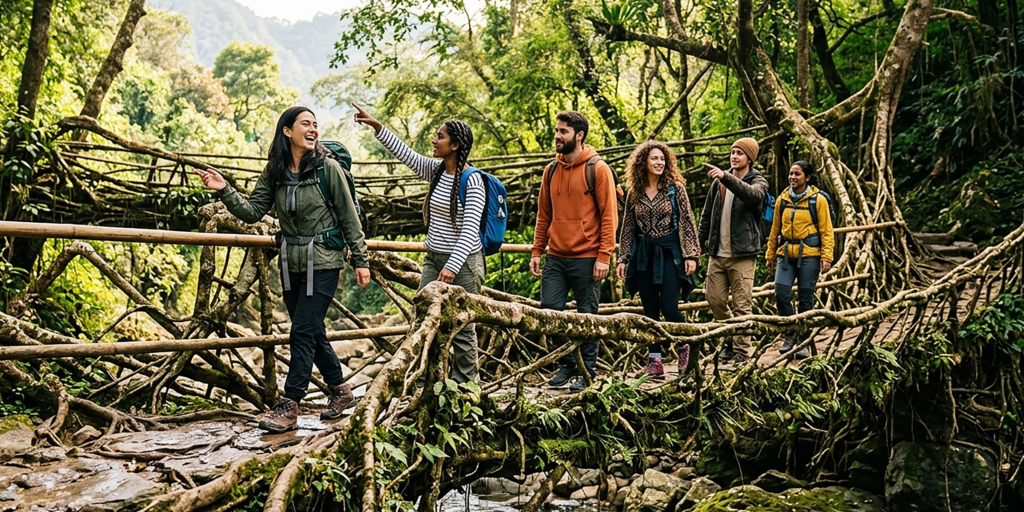
Meghalaya genuinely surprises people. You expect green hills and waterfalls, and you get those, but then you also get rivers so clear the boats look like they’re floating on air, root bridges that have been growing for 500 years, and a food culture that most Indian travellers have never encountered. It’s one of those places where every person in the group has a different favourite moment.
When to Visit in 2026
October to April is the window to aim for. October and November hit a sweet spot where the waterfalls are still running strong from monsoon runoff but the rain itself has mostly stopped. Avoid May to September if this is your first visit, the rainfall here is not gentle.
What to Do There
- The Double Decker Living Root Bridge in Nongriat is the reason most people come to Meghalaya and it earns the hype. It’s a 3,500-step descent from the trailhead at Tyrna village, and the bridges themselves, grown by the Khasi people over centuries by training fig tree roots across rivers, are genuinely astonishing up close.
- Dawki and the Umngot River is where the glass-water photos come from. The river is so clear that boats appear to float mid-air above the riverbed. Worth an overnight to see it in early morning light before the tourist boats arrive.
- Mawlynnong is often called Asia’s cleanest village and the label is earned. Small, well-maintained, genuinely lovely for an afternoon.
- Nohkalikai Falls near Cherrapunji is the fourth highest waterfall in the world and the drops into the green pool below are extraordinary. Best after monsoon when it’s running at full volume.
- Mawsmai Caves are short limestone caves accessible without any specialised gear. A good hour’s activity that adds geological drama to the trip.
- Shillong makes a great base. Ward’s Lake, the bustling Police Bazaar for local shopping, and the Don Bosco Museum which is one of the best regional cultural museums in Northeast India.
Best group size: 6 to 15 Why groups love it: The trekking trails are long enough to feel genuinely rewarding but not so technical that anyone gets left behind. And the village homestays here are the real thing, run by local families who cook for you, talk to you, and make the whole trip feel more personal than any hotel could.
Insider tip: Stay in Nongriat village at the base of the root bridge rather than heading back to Cherrapunji each evening. It’s quieter, you get the bridges in golden hour without the day crowds, and waking up in that valley is an experience on its own.
Meghalaya trips tend to be the ones where photos come flooding in from five different people’s cameras. Tripsil’s shared memories album keeps everything in one place so you’re not chasing everyone for photos in a WhatsApp thread three weeks later.
5. Pondicherry
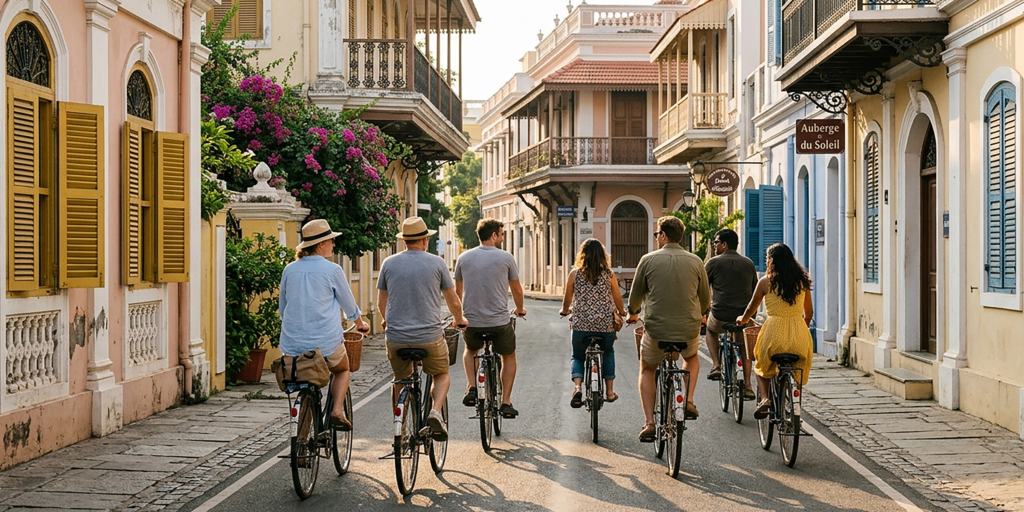
Pondicherry moves at its own speed and that speed is slower than everywhere else. The French Quarter streets are wide and shaded, the cafes spill onto pavements, and there’s a particular ease to the place that gets into your whole group within about 24 hours. The best version of a Pondicherry trip is the one where you tear up the over-scheduled itinerary and just wander.
When to Visit in 2026
October to February is the best time. December and January are peak but genuinely lovely, cool evenings and clear days. One note: Pondicherry catches the northeast monsoon in November, so if your group is sensitive to rain disrupting beach plans, aim for December onwards.
What to Do There
- The French Quarter on bicycles is the move. Rent cycles from one of the many shops near MG Road, head out early morning before it gets warm, and just go. Rue Romain Rolland, Rue Suffren, the Promenade. It takes two hours and you’ll want to do it again the next day.
- Promenade Beach at sunrise is one of those simple pleasures that punches well above its weight. The whole group out there in the early morning, nothing to do but watch the sea.
- Sri Aurobindo Ashram is genuinely calm in a way that’s rare. Worth an hour even if the group isn’t spiritually inclined.
- Paradise Beach is accessed by a short boat ride from Chunnambar backwaters. Less crowded than the main beaches, good for a group half-day.
- Auroville is 10 km out and worth the trip. The Matrimandir has a public viewing area that doesn’t require prior permission. The Visitor’s Centre and the Auroville Bakery are the real highlights for most groups.
- The Tamil Quarter temples, particularly Manakula Vinayagar, are active and atmospheric. Evening puja here is completely different from the tourist-facing French Quarter and gives the trip some cultural depth.
Best group size: 8 to 20 Why groups love it: The whole town is walkable or cyclable. Groups can split, explore at different paces, and meet up for meals without any car logistics. The heritage guesthouses on the main French Quarter streets accommodate mixed group sizes and mixed budgets in the same area.
Insider tip: Stay in the French Quarter even if beach proximity sounds appealing from a hotel map. You’re never more than a 5-minute walk from the sea, and the atmosphere, the sounds, the morning light, it’s incomparable to any beach-adjacent property.
Pondicherry is a great first group trip for people who’ve never travelled together before. If that’s you, download Tripsil before you go. Having one shared itinerary everyone can see eliminates the “wait what are we doing tomorrow” conversation at breakfast.
6. Gokarna, Karnataka
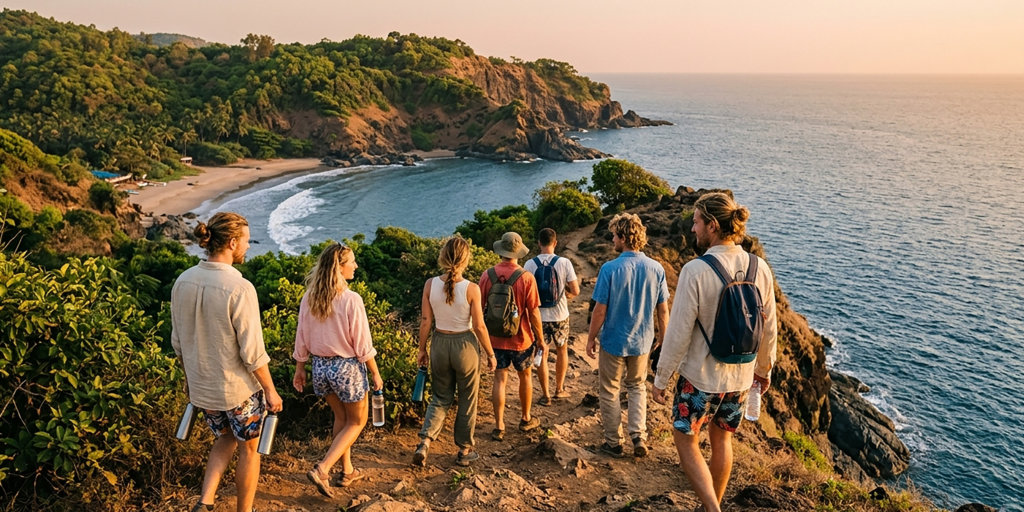
Gokarna is the beach trip that doesn’t feel like a compromise. It has the coastline, the cafes, the hammocks, the evenings watching the sun go down over the water, all the things you want from a beach trip. But it still has some of the soul that Goa has been slowly trading away for the last decade. For groups who want genuine coastline without the weekend crowd pricing, this is the answer.
When to Visit in 2026
November to March is ideal. Calm sea, good weather, beach cafes running at full strength. The monsoon (June to September) closes most of the beach activity down and makes the sea unsafe for swimming.
What to Do There
- The Coastal Trek from Gokarna town through all five beaches (Gokarna, Kudle, Om, Half Moon, Paradise) is the trip highlight. Three to four hours at a relaxed pace, swimming stops built in, and the full group moving together through one of Karnataka’s prettiest coastlines.
- Om Beach is the famous one, shaped like the Om symbol from above. It earns the reputation. Good for a full beach day.
- Kudle Beach is the best base. Quieter than Om, better guesthouses, and a 20-minute walk when you want the Om Beach energy.
- Half Moon and Paradise Beaches are for the group members who want proper isolation. No shops, minimal facilities, just beach. Reach them by continuing the coastal trek or hire a boat from Om Beach.
- Mahabaleshwar Temple is one of Karnataka’s most important Shiva temples. The evening aarti, with the sound carrying through the narrow temple lanes, is worth setting a reminder for.
- Mirjan Fort is 30 minutes up the coast and almost nobody visits it. A 16th century fort set inside a forested hill, partially reclaimed by trees. A good half-day excursion for the group that wants some history mixed in.
Best group size: 6 to 18 Why groups love it: Five beaches with different personalities means the group never has to fully agree on one thing. The people who want action go to Om. The people who want quiet go to Kudle or beyond. Everyone meets for dinner.
Insider tip: Stay on Kudle Beach, not Om. The reviews push Om harder but Kudle gives you better value, better guesthouses, and the same access to everything Om has. It’s a 20-minute walk or a quick auto ride.
Beach trips always come with group expenses that are easy to lose track of: the boat to Paradise Beach, the cafe tabs, the auto rides. Tripsil lets anyone in the group log expenses as they happen so the split is ready the moment you get home.
7. Bir Billing, Himachal Pradesh
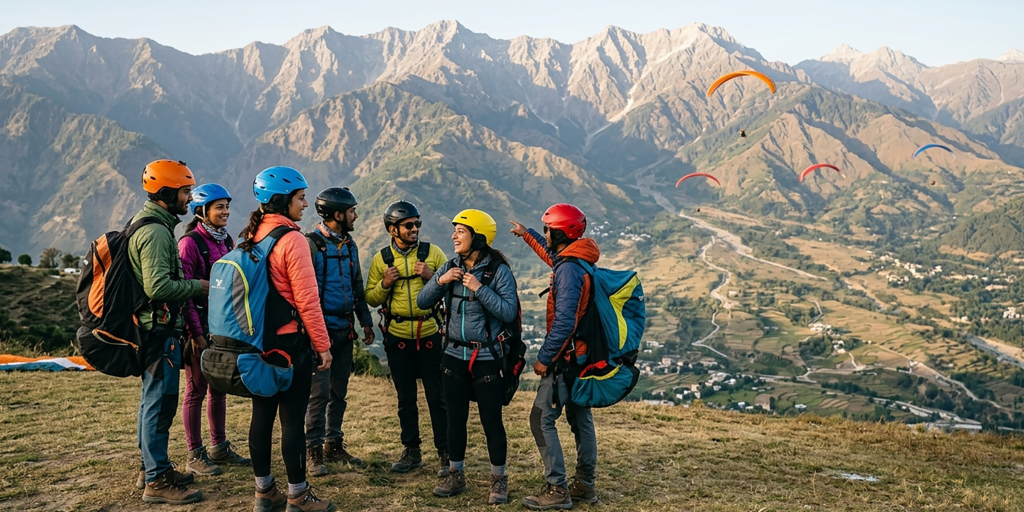
Bir is a small Tibetan settlement in the Kangra Valley that has somehow become one of India’s best-kept travel secrets. The paragliding, launched from Billing at 2,400 metres above, is world-class. But even if nobody in the group flies, the town itself is worth the visit. Good cafes, monasteries with proper prayer hall access, mountain views from every window, and a pace of life that makes three days feel like a week.
When to Visit in 2026
March to June and October to November are the two flying seasons. October and November in particular have incredible clarity and the autumn colours on the slopes make the flight scenery extraordinary.
What to Do There
- Tandem Paragliding from Billing is the centrepiece. The 14-km flight from the Billing launch site down to the Bir landing zone takes 20 to 30 minutes depending on thermals. The Dhauladhar range below you is something you don’t forget quickly.
- Bir Monastery (Chokling Gompa) is the most accessible of the local monasteries. The prayer hall is open to visitors, the monks are used to curious travellers, and the surrounding Tibetan colony has a quiet dignity that’s easy to spend an afternoon in.
- The Tibetan Colony walk through Bir is genuinely interesting. Thangka painting studios, Tibetan restaurants with yak butter tea, small shops selling things you won’t find anywhere else in India.
- Cycling the Kangra Valley is a great group half-day. The flat terrain around Bir is ideal, rentals are available in the village, and riding out through the tea gardens and villages with the Dhauladhar as a backdrop is a proper experience.
- Billing viewpoint is worth visiting even if no one is flying. Drive up to the launch meadow at 2,400 metres and just stand there. The panoramic view of the valley alone is worth the journey.
Best group size: 8 to 16 Why groups love it: The group paragliding experience is unlike anything else. You all fly in back-to-back slots, watch each other come in to land, and by the time the last person touches down, there’s a shared adrenaline buzz that carries the whole rest of the trip.
Insider tip: Always get a single all-inclusive quote that covers the Billing transport, the flight, and the landing zone transfer. Many operators quote just the flight and charge separately for the rest. Also, book directly with a local APPI-certified operator rather than an aggregator app. You get the same pilots for less.
Adventure trips need a bit more pre-trip coordination than most. Tripsil’s task feature is useful here: assign the paragliding booking to one person, the accommodation to another, the transport to a third, and everyone can see what’s been confirmed in real time.
8. Hampi, Karnataka
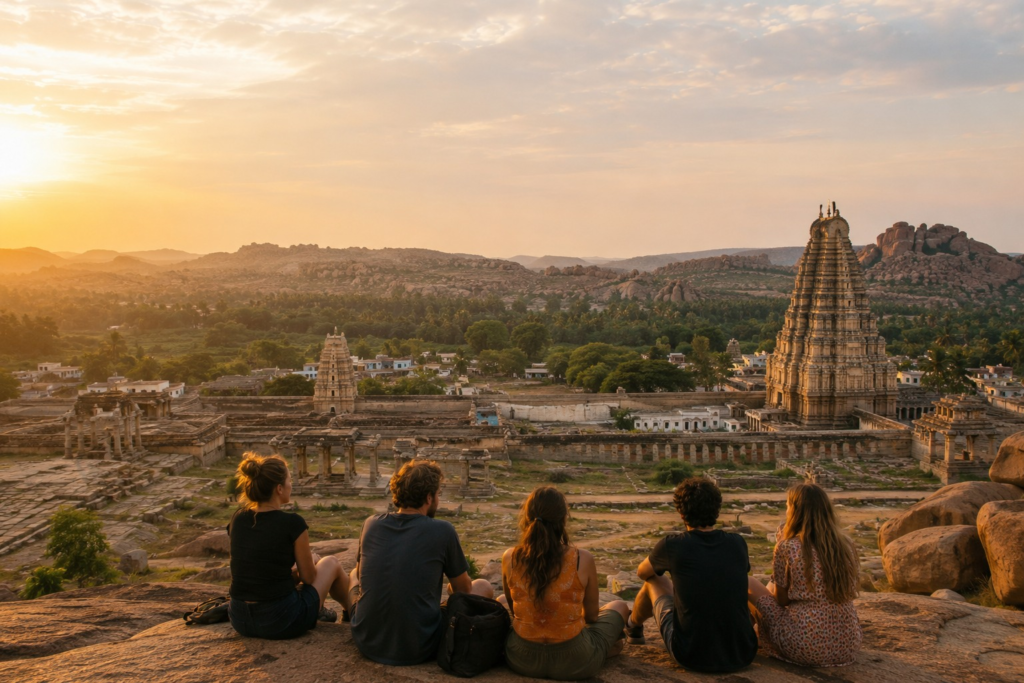
Hampi is one of those places where you arrive thinking you’ll spend two days and start rearranging plans to stay longer. The ruins of the Vijayanagara Empire spread across 26 square kilometres of boulder landscape along the Tungabhadra river, and no matter how much time you have, there’s always one more temple, one more view, one more lane through the old bazaar that pulls you forward. For groups, it’s practically perfect.
When to Visit in 2026
October to February. The light in December and January on the ancient stone is remarkable. March onwards gets very hot and the exposed ruins make it uncomfortable for long days of walking.
What to Do There
- Virupaksha Temple is the living heart of Hampi, still active after 7 centuries. Arrive for the morning puja if you can. The temple elephant, Lakshmi, is usually around for the morning ritual.
- Vittala Temple and the Stone Chariot is Hampi’s most photographed monument. The musical pillars inside the mandapa genuinely resonate at different pitches when tapped. The stone chariot in the courtyard is extraordinary.
- Matanga Hill at sunrise is the best view in Hampi, looking out over the entire site as the light comes up. Be there by 5:30 AM to beat the tour groups. It’s a 20-minute climb and it’s worth every step.
- Hampi Bazaar is the ruined marketplace stretching from Virupaksha Temple. Walking it at golden hour, with the light catching the old stone columns, is one of the simplest and best things you can do.
- Hippie Island (Virupapur Gaddi), the south bank is a completely different atmosphere from the heritage side. Green, quiet, full of banana farms and small guesthouses. Many groups split across the two banks and ferry across for meals, which works beautifully.
- Bouldering on Hampi’s granite is world-class. Several local operators run beginner and intermediate sessions. Even people who’ve never climbed before can get something from a half-day session on the boulders.
- Tungabhadra river coracle rides are a proper Hampi experience. Hire a private boatman near the Virupaksha Temple ghat rather than waiting for the government coracle. Better timing, group rates, and the boatmen know where the good swimming spots are.
Best group size: 6 to 20 Why groups love it: Hampi’s diversity of landscapes and activities means there’s genuinely no group that doesn’t find something for everyone. Cyclists, swimmers, history lovers, climbers, cafe people. Everyone gets their version of Hampi and they all reconvene at dinner with completely different stories from the same day.
Insider tip: Rent bicycles on day one. Hampi on foot across those distances is exhausting. On a bicycle, covering the main heritage circuit takes a morning, you see twice as much, and the ride itself between the ruins and boulders is memorable.
Hampi’s two-bank structure means the group is often splitting and rejoining throughout the day. The Tripsil group chat keeps all coordination inside the trip itself so the plans don’t get buried under unrelated messages.
9. Andaman Islands
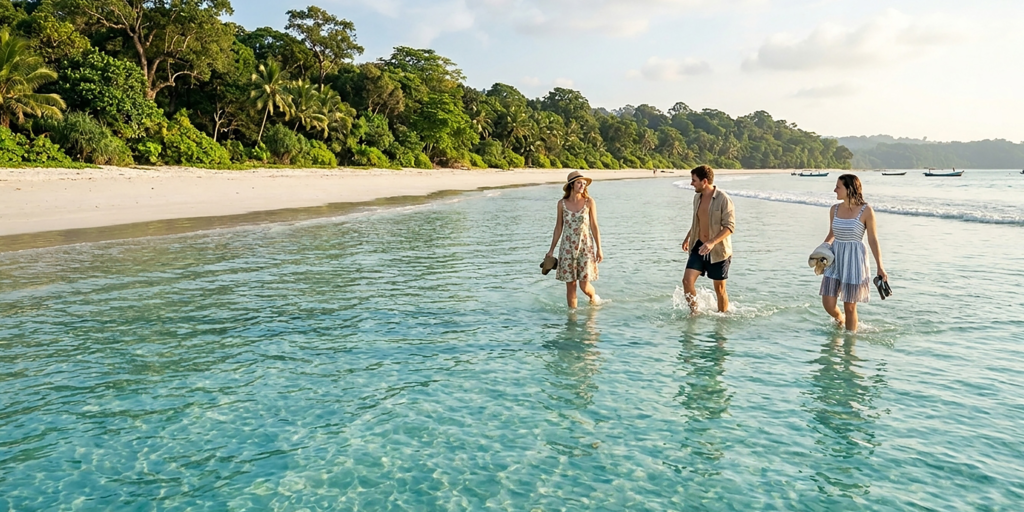
You’ll hear people say the Andamans changed how they think about beaches in India. It sounds like an exaggeration until you’re standing at Radhanagar Beach watching the turquoise water and thinking about every other beach you’ve ever been to. The Andamans are not a budget destination, but for the right group occasion, they’re worth every rupee.
When to Visit in 2026
October to May, with December to February being peak. Book group accommodation at least 3 to 4 months ahead for the December and January window. The sea is calmest from November to April, which matters for diving and snorkelling plans.
What to Do There
- Radhanagar Beach, Havelock (Swaraj Dweep) is the headline. Consistently ranked among Asia’s best. The colour of the water is genuinely that blue. Go at sunset and stay for dark.
- Elephant Beach snorkelling is the most accessible marine experience in the Andamans. Shallow coral, huge variety of fish, calm enough for people who’ve never snorkelled before. A half-day boat trip here is a group non-negotiable.
- Scuba diving with a PADI operator out of Havelock. Even first-timers can do a beginner’s dive. For the group members who take to it, the deeper sites around Havelock have some of the best visibility in India.
- Neil Island (Shaheed Dweep) is quieter and greener than Havelock. Rent cycles, ride to Laxmanpur Beach in the evening, and watch the sunset from the natural rock bridge. It feels like a completely different island chain.
- Cellular Jail, Port Blair matters historically and is worth the visit. The evening light and sound show is an unexpectedly moving experience. But one night in Port Blair is enough.
- Glass-bottom boat rides from Havelock jetty work well for group members who don’t want to get in the water but still want to see what’s below the surface.
Best group size: 6 to 14 Why groups love it: The island-hopping format, Havelock to Neil and back, gives the trip natural structure and variety. Ferry tickets can be booked as a group block, which eliminates the scheduling chaos of everyone booking separately. The resort activity packages on Havelock scale well for groups of 6 to 14.
Insider tip: Spend one night in Port Blair maximum. Most groups waste two full days there. The Cellular Jail is worth half a day. Everything else Port Blair offers can be skipped. Take the morning ferry to Havelock on day two. That extra island day is the best thing you can do with your Andaman budget.
An Andaman trip with 10 people has a lot of moving parts: ferry timings, activity bookings, resort check-ins, shared meals. Tripsil’s shared itinerary keeps every detail visible to the whole group, which matters when phone signal on the islands is inconsistent at best.
Quick Comparison Table
| Destination | Best Group Type | Budget Level | Best Month 2026 |
| Spiti Valley | Adventure, friends | Mid-range | July to August |
| Coorg | Family, friends | Mid-range | November to December |
| Rann of Kutch | Corporate, family | Mid to premium | January to February |
| Meghalaya | Adventure, friends | Budget to mid | October to November |
| Pondicherry | Mixed groups, corporate | Budget to mid | December to January |
| Gokarna | Friends, budget groups | Budget | November to December |
| Bir Billing | Adventure, friends | Budget to mid | April to May |
| Hampi | Mixed groups, all types | Budget to mid | November to December |
| Andaman Islands | Celebration, premium | Mid to premium | December to February |
How to Choose Based on Your Group Type
Friends trip (22 to 35): Gokarna, Bir Billing, Meghalaya, or Hampi. These are destinations where the group can split and explore independently and come back to each other with stories. The cafe and hostel culture keeps things social without forcing everyone onto the same schedule.
Family trip (mixed ages): Coorg, Pondicherry, or Rann of Kutch. The priority here is comfort, accessibility, and activities that genuinely work across ages. You don’t want a destination that quietly assumes everyone has the knees of a 25-year-old.
Corporate outing: Rann of Kutch for pure visual impact with low physical demand. Coorg for structured team activities in a resort setting. Pondicherry for the group that wants something culturally interesting alongside genuine leisure.
Adventure group: Spiti Valley, Meghalaya, or Bir Billing. These places ask something of you. They’re best when the whole group is committed to the experience, not just tagging along for the photos.
Milestone celebration (birthday, reunion, farewell): Andaman Islands. No other destination in India delivers that combination of jaw-dropping setting, quality activities, and the sense that you’ve done something genuinely special together.
Ready to Make It Happen?
You’ve got the destination. Now use one app to actually plan it together.
Tripsil is a free group trip planning app built for exactly this: one shared itinerary the whole group can edit, an expense splitter that handles who paid what, a built-in group chat that keeps trip decisions out of your main WhatsApp, and a shared photo album where everyone’s memories live in one place. Free on iOS and Android, no subscription required.
Once the destination is locked, download Tripsil and create your trip in under 60 seconds. Invite the group with a single link. Build the plan together.
Get Tripsil free on iOS and Android
Pick the destination. Start the trip. Everything else, Tripsil handles.