


Planning a vacation should be exciting, but even experienced travelers can make simple mistakes that lead to unexpected costs, missed experiences, and unnecessary stress.
Sometimes it’s something small—forgetting to renew a passport or overlooking airport transfer times. Other times, it’s a series of minor planning oversights that snowball into larger problems, such as overspending, missing reservations, or spending more time coordinating logistics than enjoying the destination.
These mistakes affect every type of traveler:
- First-time travelers
- Families
- Couples
- Solo travelers
- Business travelers
- Weekend explorers
- International tourists
- Friend groups planning vacations together
The good news is that most travel planning mistakes are completely preventable.
With a thoughtful vacation planning process, a realistic itinerary, and the right planning tools, you can reduce stress, save money, and focus on creating memorable experiences instead of solving avoidable problems.
In this guide, we’ll explore the 15 biggest travel planning mistakes, explain why they happen, and share practical strategies to help you avoid them.
Key Takeaways
Avoiding travel planning mistakes isn’t about creating the perfect itinerary—it’s about eliminating avoidable problems before they happen.
Remember these principles:
- Plan early, but stay flexible.
- Research your destination thoroughly.
- Budget for more than flights and hotels.
- Keep important documents organized.
- Allow buffer time between activities.
- Communicate clearly during group trips.
- Prepare for offline situations.
- Use tools that simplify, rather than complicate, your planning process.
The more organized your travel plans are before departure, the more freedom you’ll have to enjoy spontaneous moments once your vacation begins.
The 15 Biggest Travel Planning Mistakes
Mistake #1: Not Creating a Travel Itinerary

Why People Make This Mistake
Many travelers assume they’ll “figure it out” after arriving. While spontaneity can be enjoyable, having no itinerary often results in wasted time, missed attractions, conflicting schedules, and unnecessary decision fatigue.
Many of these coordination issues are among the common group travel problems that travelers face, but they can usually be avoided with better planning before departure.
How It Impacts Your Trip
Without an itinerary, you may:
- Miss attraction opening hours
- Book activities on the wrong days
- Spend hours deciding what to do next
- Double-book reservations
- Forget important confirmations
- Waste valuable vacation time
Instead of exploring your destination, you end up organizing it while you’re there.
How to Avoid It
You don’t need a minute-by-minute schedule, but you should create a flexible itinerary that includes:
- Daily destinations
- Reservation times
- Transportation plans
- Hotel check-in and check-out details
- Backup activities
- Emergency contact information
For group trips, keeping the itinerary in a shared space ensures everyone stays informed and reduces repetitive questions like, “What’s next?” or “Where are we meeting?”
A travel planning app such as Tripsil makes this easier by allowing everyone to access the latest itinerary, collaborate on plans, share updates, and keep reservations organized in one place instead of scattered across chats and emails.
Pro Tip
Plan your days around location rather than attraction popularity. Visiting nearby places together reduces travel time and gives you more flexibility if plans change.
Mistake #2: Booking Flights Too Late
Why People Make This Mistake
Some travelers delay booking because they’re waiting for lower prices or finalizing plans with friends and family. Unfortunately, airfare doesn’t always become cheaper closer to departure.
For many popular routes, prices increase as available seats become limited.
How It Impacts Your Trip
Late bookings can result in:
- Higher ticket prices
- Fewer flight options
- Longer layovers
- Less convenient departure times
- Separate seating for families or groups
These compromises often increase both costs and travel fatigue.
How to Avoid It
While prices vary by destination and season, consider these best practices:
- Start monitoring fares several months before your trip.
- Book early for peak travel seasons and holidays.
- Compare departure airports if possible.
- Set price alerts on trusted flight search platforms.
- Confirm travel dates with your group before purchasing tickets.
Booking early also makes it easier to coordinate accommodations, transportation, and activities around confirmed flight schedules.
Pro Tip
Secure your flights before planning the rest of your itinerary. Flight schedules often determine the structure of your entire vacation.
Mistake #3: Ignoring Visa and Passport Requirements
Why People Make This Mistake
Travelers sometimes assume that their passport is valid or believe they don’t need a visa because they visited another country recently.
Unfortunately, entry requirements vary by destination and can change over time.
Many countries also require passports to remain valid for several months beyond your planned departure date.
How It Impacts Your Trip
Ignoring documentation requirements can lead to:
- Being denied boarding
- Refused entry at immigration
- Last-minute visa application fees
- Missed flights
- Cancelled hotel reservations
- Significant financial losses
These problems are often entirely avoidable with early preparation.
How to Avoid It
Several weeks before departure:
- Verify passport expiration dates.
- Check visa requirements for your destination.
- Confirm transit visa rules for connecting countries.
- Review vaccination or health entry requirements if applicable.
- Store digital copies of important travel documents securely.
Official government travel websites and embassy resources should always be your primary source for entry requirements.
Pro Tip
Create a travel documents folder—both digital and printed—to keep passports, visas, insurance details, and reservations easily accessible throughout your trip.
Mistake #4: Underestimating Travel Time
Why People Make This Mistake
Online maps often display ideal travel times, but real-world conditions rarely match those estimates.
Travelers forget to account for:
- Airport security
- Immigration queues
- Public transportation delays
- Traffic congestion
- Parking
- Walking distances
- Time spent finding platforms or terminals
These overlooked minutes quickly add up.
How It Impacts Your Trip
Poor time estimates can cause:
- Missed tours
- Late check-ins
- Missed trains or flights
- Rushed sightseeing
- Increased stress throughout the trip
A tightly packed itinerary leaves little room for unexpected delays.
How to Avoid It
When planning transportation:
- Add a time buffer between activities.
- Research average travel times during peak hours.
- Consider walking distances between attractions.
- Leave room for unexpected delays.
- Schedule important reservations earlier in the day when possible.
Realistic schedules are far more enjoyable than ambitious ones.
Pro Tip
Build at least 30–60 minutes of flexibility into major travel days. You’ll rarely regret having extra time, but you’ll often regret not leaving enough.
Mistake #5: Overplanning Every Day
Why People Make This Mistake
It’s natural to want to see everything, especially when visiting a destination for the first time.
Many travelers fill every hour with activities, believing they’ll maximize their vacation.
In reality, this often creates exhaustion rather than memorable experiences.
How It Impacts Your Trip
An overloaded itinerary can lead to:
- Physical fatigue
- Decision fatigue
- Missed reservations
- Less time enjoying attractions
- Increased stress
- Burnout halfway through the vacation
Instead of appreciating each destination, travelers rush from one place to another.
How to Avoid It
Aim for balance instead of maximum productivity.
A practical daily structure often includes:
- One major attraction
- One or two secondary activities
- Flexible meal times
- Free exploration
- Rest periods
- Buffer time for unexpected discoveries
Some of the best travel memories come from unplanned moments rather than tightly scheduled itineraries.
Planning apps like Tripsil also make it easy to rearrange activities without losing track of reservations or leaving group members uninformed when plans change.
Pro Tip
Leave at least two to three hours of unscheduled time each day. Flexibility often leads to the most memorable travel experiences.
Mistake #6: Not Budgeting Properly

Why People Make This Mistake
Many travelers only budget for the “big-ticket” expenses like flights and hotels. However, it’s the smaller, recurring costs—local transportation, meals, attraction tickets, tips, taxes, baggage fees, mobile data, and souvenirs—that often push a trip over budget.
Group travelers face an additional challenge: shared expenses. Without a plan, it becomes difficult to track who paid for what, leading to confusion and awkward conversations.
How It Impacts Your Trip
Poor budget planning can result in:
- Running out of money before the trip ends
- Using credit cards more than expected
- Skipping attractions to save money
- Financial disagreements during group trips
- Unexpected debt after returning home
Instead of enjoying your vacation, you’re constantly checking your bank balance..
How to Avoid It
Create a complete travel budget before booking anything.
Include categories such as:
- Flights
- Accommodation
- Local transportation
- Food and drinks
- Activities
- Shopping
- Emergency fund
- Travel insurance
- Visa fees
- Mobile internet
- Tips and service charges
For group trips, decide in advance:
- Which expenses will be shared
- Which expenses are personal
- How reimbursements will be handled
Keeping expenses organized in one place helps avoid misunderstandings. Tripsil includes shared expense tracking alongside itineraries, making it easier for everyone to stay informed throughout the trip.
Pro Tip
Add a 10–20% contingency fund to your travel budget for unexpected expenses such as transportation delays, medical needs, or last-minute activity changes.
Mistake #7: Skipping Travel Insurance
Why People Make This Mistake
Travel insurance often feels like an unnecessary extra cost—until something goes wrong.
Many travelers assume they’ll never need it because they’ve never experienced a medical emergency, lost luggage, or a cancelled trip.
Unfortunately, unexpected situations can happen to anyone.
How It Impacts Your Trip
Without appropriate travel insurance, you could face significant expenses related to:
- Medical emergencies
- Hospitalization abroad
- Flight cancellations
- Lost or delayed baggage
- Trip interruptions
- Emergency evacuation
Depending on your destination, even minor medical treatment can be costly.
How to Avoid It
Before purchasing insurance:
- Compare multiple providers.
- Understand what’s covered and excluded.
- Verify coverage limits.
- Check adventure activity exclusions if relevant.
- Keep your policy number accessible both digitally and offline.
Travel insurance isn’t just about protecting your money—it’s about reducing uncertainty.
Pro Tip
Purchase travel insurance soon after booking major trip expenses so you’re covered if you need to cancel before departure.
Mistake #8: Booking Accommodation Without Researching the Location
Why People Make This Mistake
Travelers often choose accommodation based solely on price, star ratings, or attractive photos.
What they forget to evaluate is the surrounding neighborhood.
A hotel can receive excellent reviews yet still be far from public transportation, restaurants, attractions, or essential services.
How It Impacts Your Trip
Poor accommodation choices can lead to:
- Long daily commutes
- Higher transportation costs
- Safety concerns
- Limited dining options
- Wasted sightseeing time
- Less flexibility
A cheaper hotel located far from your planned activities may ultimately cost more in both money and time.
How to Avoid It
Before booking accommodation, research:
- Neighborhood safety
- Walking distance to attractions
- Public transportation access
- Grocery stores and restaurants nearby
- Airport transfer options
- Noise levels
- Recent guest reviews
When traveling as a group, also consider whether the property offers common spaces where everyone can comfortably gather.
Pro Tip
Open your planned attractions on a map before booking accommodation. Saving 20% on your hotel isn’t worthwhile if you spend twice as much on transportation.
Mistake #9: Not Checking Weather Conditions
Why People Make This Mistake
Many travelers assume the weather will match the season they imagine.
However, climates vary significantly—even within the same country.
Mountain regions, coastal destinations, deserts, and tropical locations often experience dramatically different weather patterns.
How It Impacts Your Trip
Ignoring weather forecasts can lead to:
- Packing the wrong clothing
- Missing outdoor activities
- Safety risks
- Additional shopping expenses
- Poor photography conditions
- Cancelled excursions
Weather also affects transportation, especially flights, ferries, hiking trails, and national parks.
How to Avoid It
A week before departure:
- Check long-range weather forecasts.
- Research seasonal weather trends.
- Understand sunrise and sunset times.
- Verify local climate conditions.
- Prepare clothing for temperature changes.
If you’re planning outdoor activities, always have indoor alternatives.
Pro Tip
Pack versatile clothing that can be layered instead of relying on one type of weather. It’s easier to add layers than replace missing clothing after arrival.
Mistake #10: Overpacking
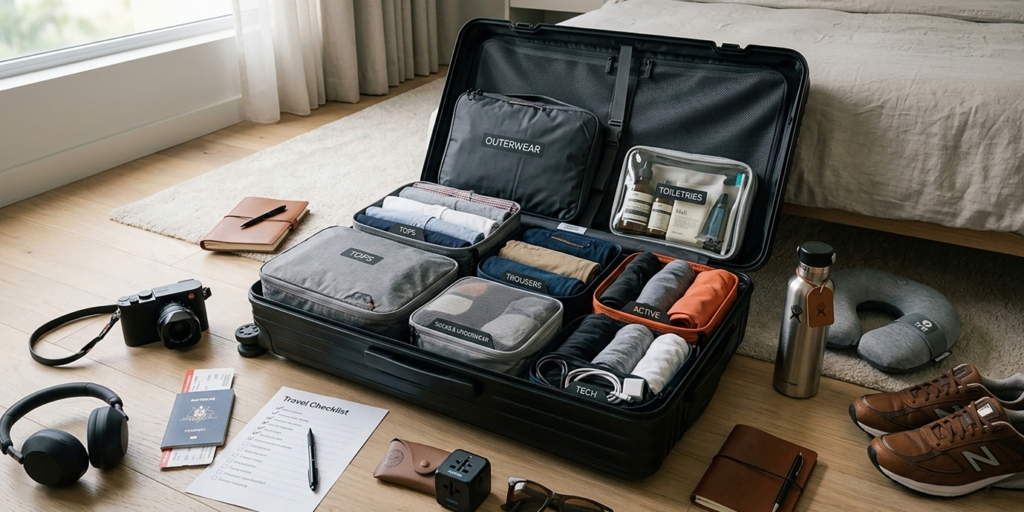
Why People Make This Mistake
Travelers often pack for every possible scenario.
“What if I need this?”
“What if the weather changes?”
“What if we go somewhere fancy?”
These questions quickly turn one suitcase into two.
The reality is that most travelers use only a fraction of what they pack.
How It Impacts Your Trip
Overpacking creates several problems:
- Airline baggage fees
- Heavy luggage
- Slower airport transfers
- Difficulty using public transportation
- Limited shopping space
- Increased physical fatigue
Packing too much also makes it harder to stay organized throughout the trip.
How to Avoid It
Pack according to your itinerary rather than hypothetical situations.
A practical packing strategy includes:
- Clothing that can be mixed and matched
- Comfortable walking shoes
- Weather-appropriate outerwear
- Essential medications
- Chargers and travel adapters
- Travel documents
- Toiletries in airline-approved sizes
A packing checklist helps ensure you don’t forget important essentials while avoiding unnecessary extras.
Tripsil’s customizable trip checklists can be especially useful for families and group travelers, allowing everyone to track what they still need to pack before departure.
Pro Tip
Lay everything out before packing, then remove about one-third of the items. Most travelers don’t miss what they leave behind—but they do appreciate lighter luggage.
Mistake #11: Failing to Organize Reservations
Why People Make This Mistake
Modern travel involves dozens of confirmations spread across different apps and inboxes. Flight confirmations arrive by email, hotel bookings are stored in booking platforms, attraction tickets live in separate apps, and restaurant reservations might be buried in text messages.
By the time your trip begins, important information is scattered everywhere.
How It Impacts Your Trip
Disorganized reservations can lead to:
- Wasting time searching for confirmation emails
- Missing check-in times
- Forgetting prepaid activities
- Losing booking reference numbers
- Accidentally double-booking experiences
- Increased stress during the trip
This problem becomes even more challenging during family or group vacations when different people book different parts of the trip.
How to Avoid It
Keep all trip information in one centralized place, including:
- Flight confirmations
- Hotel reservations
- Car rental details
- Activity tickets
- Restaurant bookings
- Train or bus tickets
- Airport transfer information
- Emergency contacts
Rather than switching between multiple apps and email folders, organize everything before you leave.
Tripsil helps by keeping itineraries, reservations, notes, checklists, and travel details together, making it easier to access important information whenever you need it.
Pro Tip
Create one digital “trip hub” where every traveler can quickly access reservations instead of relying on individual inboxes.
Mistake #12: Ignoring Local Holidays and Major Events
Why People Make This Mistake
Travelers often research attractions but forget to check what’s happening at their destination during their visit.
National holidays, festivals, sporting events, religious celebrations, conferences, and school vacations can dramatically affect:
- Hotel prices
- Attraction availability
- Traffic
- Restaurant reservations
- Public transportation
- Crowd levels
Sometimes that’s a great opportunity—but sometimes it completely changes your travel experience.
How It Impacts Your Trip
Ignoring local events may result in:
- Sold-out hotels
- Long attraction queues
- Higher airfare
- Closed museums or businesses
- Heavy traffic
- Unexpected schedule changes
How to Avoid It
Before confirming your trip:
- Check national holidays.
- Research annual festivals.
- Look for major sporting events.
- Review school holiday periods.
- Check local tourism calendars.
- Verify attraction opening schedules.
If you’re intentionally traveling during a major event, book accommodation and transportation much earlier than usual.
Pro Tip
Search “[Destination] events + your travel month” before finalizing bookings. A five-minute search can prevent expensive surprises.
Mistake #13: Not Preparing Offline Maps and Important Documents
Why People Make This Mistake
Many travelers assume they’ll always have internet access.
Unfortunately, that’s not always the case.
International roaming may be expensive, local SIM cards might not work immediately, and some destinations have unreliable mobile coverage.
How It Impacts Your Trip
Without offline access, you may struggle to:
- Navigate unfamiliar streets
- Show hotel reservations
- Access boarding passes
- Contact emergency services
- Find transportation
- Communicate your destination to taxi drivers
Technology is incredibly useful—until it isn’t.
Real-World Example
After arriving in a foreign country, a traveler’s mobile network doesn’t activate as expected. Without offline maps or a saved hotel address, they spend nearly an hour trying to locate their accommodation.
How to Avoid It
Before leaving home, download:
- Offline maps
- Hotel addresses
- Boarding passes
- Passport copies
- Visa documents
- Travel insurance details
- Emergency contacts
- Important reservation confirmations
Store copies in both cloud storage and your device so they’re available without an internet connection.
Tripsil’s offline itinerary access ensures your travel plans remain available even when connectivity is limited, reducing the risk of being stranded without essential information.
Pro Tip
Never rely on a single internet connection. Prepare for the possibility of having no signal when you need information most.
Mistake #14: Poor Communication During Group Trips
Why People Make This Mistake
Group vacations involve multiple people making decisions together.
Without clear communication, simple questions quickly become recurring problems:
- Where are we meeting?
- Who booked the restaurant?
- Has everyone paid?
- What time are we leaving?
- Who has the tickets?
When information lives across multiple messaging apps, important updates are easily missed.
How It Impacts Your Trip
If you’re organizing a trip with friends or family, our upcoming How to Plan a Group Trip guide will walk you through everything from assigning responsibilities to managing shared expenses and creating collaborative itineraries.
- Missed meeting times
- Duplicate bookings
- Budget disagreements
- Frustration within the group
- Time wasted waiting for others
- Last-minute confusion
These issues can turn an enjoyable vacation into a stressful experience.
Real-World Example
Eight friends organize a weekend getaway using several messaging apps. One person changes the dinner reservation, another books a different activity, and several members never see the updated plans. The group spends much of the first day resolving communication issues instead of exploring the destination.
How to Avoid It
Before your trip:
- Decide how updates will be shared.
- Assign responsibilities.
- Share the complete itinerary.
- Track shared expenses transparently.
- Keep notes, reservations, and checklists together.
Instead of searching through hundreds of chat messages, everyone should have access to the latest version of the travel plan.
Tripsil is particularly useful for group travel because it combines collaborative itineraries, shared notes, expense tracking, checklists, and trip updates in one centralized workspace.
Pro Tip
Keep one source of truth for your trip. Everyone should know exactly where to find the latest itinerary and updates.
Mistake #15: Not Using a Travel Planning App
Why People Make This Mistake
Many travelers still rely on a combination of:
- Notes apps
- Messaging apps
- PDFs
- Screenshots
- Calendar apps
- Spreadsheets
While each tool solves one problem, switching between multiple apps makes trip planning more complicated than necessary.
How It Impacts Your Trip
Managing travel information across several platforms increases the chances of:
- Missing reservations
- Forgetting important documents
- Losing itinerary updates
- Poor collaboration
- Disorganized travel planning
The more moving parts your trip has, the more valuable centralized organization becomes.
Real-World Example
A family planning a two-week Europe vacation keeps flight details in email, hotel bookings in one app, attraction tickets in another, restaurant lists in notes, and expenses in a spreadsheet. Every travel day begins with searching through multiple apps before they can leave the hotel.
How to Avoid It
Look for a travel planning app that allows you to:
- Build itineraries
- Share plans with travel companions
- Organize reservations
- Track expenses
- Create packing checklists
- Store notes
- Access plans offline
- Keep everything in one place
For solo travelers, this improves organization.
For families and friend groups, it also improves coordination.
Tripsil is designed around these needs by bringing collaborative itinerary planning, shared travel details, expense tracking, photo sharing, offline access, notes, and checklists into one platform, reducing the need to juggle multiple apps throughout your trip.
Pro Tip
The best travel planning system isn’t the one with the most features—it’s the one your entire travel group actually uses consistently.
Before You Travel Checklist
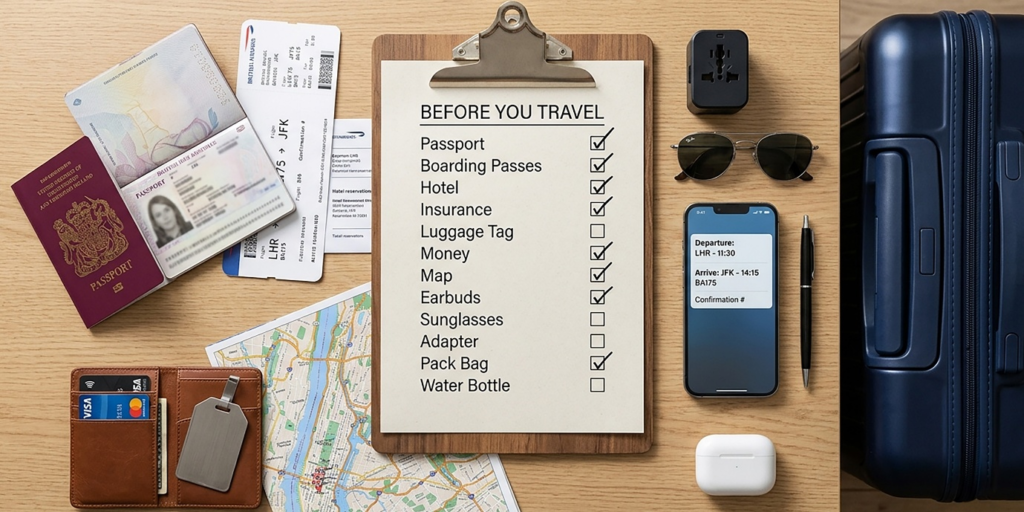
Print or save this checklist before every trip.
| Task | Complete |
| Flights confirmed | ☐ |
| Accommodation booked | ☐ |
| Passport validity checked | ☐ |
| Visa requirements verified | ☐ |
| Travel insurance purchased | ☐ |
| Budget finalized | ☐ |
| Emergency contacts saved | ☐ |
| Offline maps downloaded | ☐ |
| Reservations organized | ☐ |
| Transportation planned | ☐ |
| Weather forecast checked | ☐ |
| Packing completed | ☐ |
| Chargers and adapters packed | ☐ |
| Important documents backed up digitally | ☐ |
| Itinerary shared with travel companions | ☐ |
Completing this checklist before departure significantly reduces the likelihood of last-minute surprises.
Best Tools to Help You Avoid Travel Planning Mistakes
Different tools solve different travel planning challenges. Rather than relying on a single app for everything, many travelers combine multiple tools based on their needs.
| Tool | Best For | Helps Prevent |
| Tripsil | Collaborative trip planning, shared itineraries, expense tracking, checklists, offline access, notes, and centralized travel organization | Disorganized itineraries, poor communication, forgotten reservations, scattered travel details, budgeting issues |
| Google Calendar | Scheduling flights, reminders, and important travel dates | Missed reservations and forgotten deadlines |
| Google Maps | Navigation, saved places, offline maps, route planning | Getting lost and underestimating travel time |
| Wanderlog | Building travel itineraries and route planning | Basic itinerary organization |
| Notion | Custom travel planning templates and documentation | Personal planning and travel research |
Which Tool Should You Choose?
If you’re planning a simple solo weekend trip, a calendar and maps may be enough.
For longer vacations involving multiple destinations, reservations, budgets, packing lists, and several travelers, using a centralized travel planning platform reduces complexity and helps keep everyone aligned.
Instead of replacing every travel app, Tripsil complements essential tools like Google Maps while providing one organized place for itineraries, shared plans, expenses, notes, checklists, and trip collaboration.
Conclusion
Every memorable trip begins long before you board the plane.
Whether you’re planning a weekend getaway, a family holiday, a business trip, or an international adventure, avoiding these common travel planning mistakes can save you time, money, and unnecessary stress.
The goal isn’t to schedule every minute of your vacation—it’s to create enough structure that unexpected moments become enjoyable surprises rather than logistical problems.
A well-organized itinerary, realistic budget, accessible travel documents, and clear communication make every journey smoother.
If you’re traveling with friends or family, keeping everyone on the same page becomes just as important as choosing the right destination.
That’s where Tripsil fits naturally into the planning process. Instead of managing travel details across emails, messaging apps, spreadsheets, and notes, you can organize itineraries, reservations, expenses, checklists, shared notes, offline plans, and trip updates in one place—helping your group spend less time coordinating and more time creating unforgettable memories.
Good travel planning doesn’t remove adventure—it creates more opportunities to enjoy it.
Frequently Asked Questions (FAQs)
1. What is the biggest travel planning mistake?
The biggest travel planning mistake is starting your vacation without a clear itinerary. Even a flexible plan helps you organize transportation, accommodations, activities, reservations, and budgets while reducing stress and saving time.
2. How far in advance should I plan a vacation?
It depends on your destination and travel season.
- Weekend trips: 2–4 weeks
- Domestic vacations: 1–3 months
- International trips: 3–6 months
- Peak holiday travel: 6–12 months
Planning earlier generally provides better flight prices, accommodation choices, and availability for popular attractions.
3. What should I never forget before traveling?
Before leaving, make sure you have:
- Passport (with sufficient validity)
- Visa (if required)
- Flight confirmations
- Hotel reservations
- Travel insurance
- Emergency contacts
- Payment methods
- Offline maps
- Medications
- Chargers and travel adapters
A pre-departure checklist helps ensure nothing important is overlooked.
4. How do I organize a travel itinerary?
A good travel itinerary should include:
- Flight details
- Accommodation information
- Transportation plans
- Daily activities
- Reservation confirmations
- Emergency contacts
- Budget estimates
- Important travel documents
Keep everything in one accessible location so it’s easy to reference throughout your trip.
5. What should be included in a vacation plan?
A complete vacation plan typically includes:
- Destination research
- Budget
- Flights
- Accommodation
- Transportation
- Attractions
- Packing checklist
- Travel insurance
- Local emergency information
- Daily itinerary
The more organized your planning, the smoother your trip is likely to be.
6. How can I reduce travel stress?
You can reduce travel stress by:
- Booking major reservations early
- Leaving buffer time between activities
- Avoiding overpacked itineraries
- Creating a realistic budget
- Organizing all travel documents
- Downloading offline maps
- Sharing plans with travel companions
Preparation minimizes last-minute surprises.
7. Should I use a travel planning app?
If your trip involves multiple reservations, several destinations, or group coordination, a travel planning app can simplify organization.
Instead of switching between emails, notes, messaging apps, and spreadsheets, you can keep itineraries, reservations, expenses, checklists, and travel documents together in one place.
8. How do I organize a group vacation?
Successful group trips usually involve:
- A shared itinerary
- Clearly assigned responsibilities
- Transparent expense tracking
- Centralized reservations
- Shared packing lists
- Group communication
- Flexible scheduling
Using a collaborative planning platform helps keep everyone aligned.
9. Why do vacations become stressful?
Most vacations become stressful because of poor planning rather than the destination itself.
Common causes include:
- Last-minute bookings
- Unrealistic schedules
- Budget overruns
- Lost reservations
- Poor communication
- Missing travel documents
Good planning removes many of these avoidable problems.
10. Can good planning actually save money?
Yes.
Effective vacation planning helps you:
- Book cheaper flights
- Avoid cancellation fees
- Reduce unnecessary transportation costs
- Prevent duplicate bookings
- Minimize baggage fees
- Avoid expensive last-minute purchases
Good planning often pays for itself before the trip even begins.